5-HTP is often described simply as a ‘serotonin booster,’ but the actual mechanism involves a specific enzymatic pathway that’s worth understanding before you decide whether it fits your routine.
This article is for educational purposes and is not medical advice. 5-HTP affects serotonin, the same system targeted by antidepressants, triptans, and several other prescription drugs. Talk to a doctor or pharmacist before starting 5-HTP, especially if you take any prescription medication, are pregnant or breastfeeding, or have an existing health condition. This post may contain affiliate links; we may earn a commission at no extra cost to you.
From Tryptophan to Serotonin: The Conversion Pathway
The body makes serotonin from the amino acid tryptophan in two steps. First, tryptophan hydroxylase converts tryptophan into 5-hydroxytryptophan (5-HTP). Second, an enzyme called aromatic L-amino acid decarboxylase converts 5-HTP into serotonin.[1][2] Supplemental 5-HTP skips the first, rate-limiting step entirely by supplying the intermediate molecule directly.
Because the first conversion step is the bottleneck in normal serotonin synthesis, taking 5-HTP directly is thought to bypass the slowest part of the pathway, which is the main reason it’s positioned differently than plain tryptophan supplements.[3]

Why the Blood-Brain Barrier Matters
5-HTP crosses the blood-brain barrier, unlike serotonin itself, which cannot. This is the entire reason 5-HTP supplements exist: you cannot simply take serotonin as a pill and expect it to raise brain serotonin, because it won’t reach the brain. 5-HTP can, and once inside brain tissue, local enzymes complete the conversion.[3]
The Vitamin B6 Connection
The final conversion step (5-HTP to serotonin) requires vitamin B6 (as its active form, pyridoxal-5-phosphate) as a cofactor. This is why many 5-HTP supplements are formulated with added B6, and why a B6 deficiency could in theory blunt how efficiently 5-HTP gets converted downstream.[2]
Peripheral vs Central Conversion
Not all of an oral 5-HTP dose reaches the brain. A meaningful portion is converted to serotonin outside the central nervous system, in peripheral tissues like the gut wall.[4] Peripheral serotonin doesn’t affect mood, but it does interact with gut motility receptors, which is one reason nausea and GI upset are the most commonly reported side effects of 5-HTP.
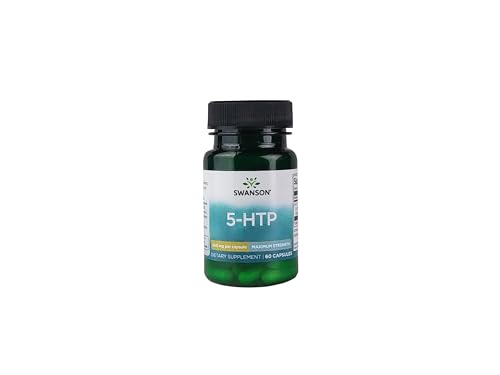
What the Decarboxylase-Inhibitor Studies Show
How much of an oral dose reaches the brain depends on how much is decarboxylated before it gets there, and that split has been measured directly rather than assumed. In rats given radiolabelled 5-HTP, blocking the peripheral enzyme with a decarboxylase inhibitor reduced peripheral serotonin formation by 82 to 100 percent over a four-hour interval, and produced a marked increase both in how much 5-HTP entered the brain and in how much serotonin appeared there.[5]
Reviews of 5-HTP supplementation make the same point in clinical terms: the amount reaching the central nervous system is governed by how much is converted in the periphery, which is why research protocols have paired 5-HTP with a peripheral decarboxylase inhibitor such as carbidopa.[4]
Retail 5-HTP is sold without any such inhibitor, so more of each dose is available for conversion outside the brain than in those protocols. That is less a flaw in the product than a reason the same milligram figure can behave differently in different people, and a reason dose comparisons drawn from the older clinical literature do not transfer directly to a capsule bought off a shelf.
Why the Mechanism Predicts the Drug Interactions
The same pathway that makes 5-HTP do anything at all is what makes its drug interactions predictable rather than idiosyncratic. Serotonin syndrome is caused by overstimulation of serotonin receptors, and it can arise either from a single serotonergic drug or from an interaction between two or more of them, with neuromuscular excitation, autonomic dysfunction and altered mental status as its central clinical features.[6]
A compound whose entire purpose is to feed serotonin synthesis belongs in that category by construction, which is why the caution about combining 5-HTP with antidepressants, triptans or MAOIs is mechanism based and not a rare-event warning [6].
The mechanism also explains what the safety literature is and is not worried about. Tryptophan was withdrawn as a supplement in 1989 after an outbreak of eosinophilia-myalgia syndrome traced to contaminated material from a single manufacturer, and 5-HTP became the substitute [7].
Analyses of several 5-HTP sources have found none of the contaminants associated with that tryptophan, and reviewers examining roughly two decades of worldwide use reported no definitive toxicity cases attributable to 5-HTP itself, with one unresolved case noted as a possible exception.[7] Raw-material purity and serotonergic drug interaction are separate questions, and only the second one depends on what else is in your cabinet.
Frequently Asked Questions
Does 5-HTP directly increase serotonin, or just support it?
5-HTP is a direct precursor, so taking it can increase the raw material available for serotonin synthesis. Whether that translates into meaningfully higher brain serotonin activity depends on individual factors like B6 status, enzyme activity, and dose, which is why responses vary between people.
Why not just take tryptophan instead of 5-HTP?
Tryptophan has to compete with other amino acids for transport into the brain and is also used for purposes besides serotonin production (like niacin synthesis). 5-HTP skips that competition and the rate-limiting conversion step, which is why some people find it more consistently effective, though both are studied.
Does the mechanism explain why 5-HTP interacts with antidepressants?
Yes. Because 5-HTP feeds the same serotonin pathway that SSRIs, SNRIs, and MAOIs act on, combining them can push serotonin activity too high, a risk known as serotonin syndrome. This is a mechanism-based interaction, not a rare fluke.
References
- 5-Hydroxytryptophan (5-HTP): Natural Occurrence, Analysis, Biosynthesis, Biotechnology, Physiology and Toxicology. International Journal of Molecular Sciences, 2020
- Mammalian Dopa decarboxylase: structure, catalytic activity and inhibition. Archives of Biochemistry and Biophysics, 2014
- 5-Hydroxytryptophan: a clinically-effective serotonin precursor. Alternative Medicine Review, 1998
- Serotonin a la carte: supplementation with the serotonin precursor 5-hydroxytryptophan. Pharmacology & Therapeutics, 2006
- Brain and peripheral metabolism of 5-hydroxytryptophan-14C following peripheral decarboxylase inhibition. Journal of Pharmacology and Experimental Therapeutics, 1976
- Serotonin syndrome: a focused review. Basic & Clinical Pharmacology & Toxicology, 2023
- Safety of 5-hydroxy-L-tryptophan. Toxicology Letters, 2004
These statements have not been evaluated by the Food and Drug Administration. This information is not intended to diagnose, treat, cure, or prevent any disease. Content is for informational purposes only and is not medical advice; consult a qualified healthcare provider before starting any supplement. As an Amazon Associate we earn from qualifying purchases.
