Ready to buy? Check current prices on Amazon and compare deals before you decide.
Perimenopause, the transitional phase leading up to menopause, often brings about a variety of changes, and for many women, managing weight can become a new challenge. Fluctuating hormones, shifts in metabolism, and lifestyle factors can all contribute to changes in body composition during this time.
Amidst these changes, some women explore various approaches to support their well-being. This article will delve into the potential connection between 5-HTP, serotonin, and weight management, particularly during the perimenopausal period, while emphasizing the current understanding and limited evidence.
Understanding Perimenopause and Weight Changes
Perimenopause is characterized by hormonal fluctuations, primarily in estrogen and progesterone, as the body gradually prepares for the end of menstrual cycles. These shifts can influence various bodily functions, including metabolism, fat distribution, and appetite regulation. Many women report an increase in abdominal fat and a general difficulty in maintaining their previous weight during this phase.
Beyond hormonal shifts, other factors like age-related muscle loss, changes in activity levels, and sleep disturbances can also play a role in weight dynamics during perimenopause. Addressing weight changes often involves a multifaceted approach, focusing on diet, physical activity, and overall lifestyle.
The Role of Serotonin in Appetite and Mood
Serotonin is a crucial neurotransmitter that plays a significant role in regulating mood, sleep, digestion, and appetite. Often referred to as a ‘feel-good’ chemical, serotonin contributes to feelings of well-being and contentment. Within the brain, serotonin pathways are involved in signaling satiety, which is the feeling of fullness after eating, and can influence food cravings.
Imbalances in serotonin levels have been linked to various issues, including mood variations and changes in appetite. Some research suggests that adequate serotonin levels may contribute to a sense of satisfaction, potentially reducing the drive to overeat or seek comfort foods, particularly those high in carbohydrates.
What is 5-HTP and How Does it Relate to Serotonin?
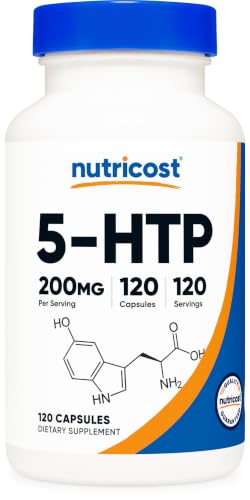
5-Hydroxytryptophan (5-HTP) is a naturally occurring amino acid that the body produces from tryptophan, an essential amino acid found in protein-rich foods. 5-HTP is a direct precursor to serotonin, meaning that once ingested, it can be converted into serotonin within the body. This conversion process is a key step in the body’s natural serotonin synthesis pathway.
Because of its role as a serotonin precursor, 5-HTP has been explored for its potential influence on various serotonin-related functions, including mood, sleep, and appetite. The idea is that by supporting serotonin production, 5-HTP might indirectly influence behaviors and feelings associated with these functions.
Exploring the Link: 5-HTP, Serotonin, and Perimenopausal Weight Management
Given serotonin’s role in appetite regulation and mood, and 5-HTP’s ability to support serotonin production, some interest exists in whether 5-HTP could play a supportive role in weight management, particularly during perimenopause. The hypothesis is that by potentially enhancing satiety signals and supporting mood balance, 5-HTP might indirectly assist individuals in making dietary choices that align with their weight management goals.
It’s important to approach this topic with a clear understanding of the current evidence, and that evidence is more specific than this framing usually allows. 5-HTP itself has been given to people and its effect on eating behavior measured, so the picture is not only inferred from serotonin biology. What has never been tested is 5-HTP in perimenopausal women. That is a much narrower gap than saying the research does not exist, and the section below sets out what the trials that do exist actually did.
Therefore, while the concept is intriguing, any potential benefit of 5-HTP during perimenopause specifically is not established, because that population has not been studied. The trials below were run in obese and overweight adults and in exercising adults, at doses that mostly sit well above what retail capsules supply, which is the detail that decides how much they transfer.
What the Human 5-HTP Trials Measured
The earliest of these studies gave 5-HTP or a placebo to nineteen obese women in a double-blind crossover design over five weeks, with no diet prescribed alongside it. The women taking 5-HTP reported reduced appetite, ate less, and lost weight during the observation period. Their mood scores did not change, which is worth noting on a page about a serotonin precursor[1]. A companion trial in twenty obese adults ran two consecutive six-week periods, with no diet in the first and a recommended calorie target in the second, and found significant weight loss in the treated group during both periods along with reduced carbohydrate intake and consistent early satiety[2].
A later randomized, placebo-controlled trial in overweight adults with non-insulin-dependent diabetes found that those receiving 5-HTP cut their daily energy intake, reducing both carbohydrate and fat, and lost body weight over two weeks without any diet being prescribed[3]. A trial in 27 overweight women used a sublingual spray of plant extracts naturally containing 5-HTP rather than a capsule, and reported a significantly greater increase in the sensation of satiety than placebo over eight weeks, along with differences in body mass index, skinfold thickness and hip circumference[4]. That one tested a different product in a different delivery form, so it speaks to the mechanism rather than to anything on a supplement shelf.
The dose is where this becomes practical. The trials that reduced how much people ate used amounts far above a typical retail serving: 8 mg per kilogram of body weight per day in the first, 900 mg per day in the second, and 750 mg per day in the third. Products on the shelf are commonly sold as 100 mg or 200 mg capsules, so matching those study doses would mean taking several capsules a day, and none of these trials were designed to tell you whether that is sensible over months rather than weeks.
The one modern trial run at a dose a single capsule can deliver points somewhere different. It gave 100 mg per day for eight weeks to 48 exercise-trained men and women who were asked not to change their training or their eating. Fat mass fell in the 5-HTP group and the change differed significantly from placebo, but lean body mass, total body water and percentage body fat did not move, and there was no change in food intake either between or within groups. The authors called the result preliminary and limited[5]. That last detail cuts against the satiety story this page opened with: at a capsule-sized dose, the one trial that looked did not find people eating less.
Lifestyle Considerations Alongside 5-HTP
Regardless of whether one considers 5-HTP, a holistic approach to weight management during perimenopause is generally recommended. This includes prioritizing a balanced diet rich in whole foods, fruits, vegetables, and lean proteins, while limiting processed foods and added sugars. Regular physical activity, incorporating both cardiovascular exercise and strength training, is also vital for maintaining muscle mass and supporting metabolism.
Other lifestyle factors, such as adequate sleep, stress management techniques, and staying well-hydrated, also contribute significantly to overall well-being and can indirectly support weight management efforts. Any consideration of supplements like 5-HTP would ideally be part of a broader, healthy lifestyle framework.
References
- The effects of oral 5-hydroxytryptophan administration on feeding behavior in obese adult female subjects. J Neural Transm (1989). PMID 2468734
- Eating behavior and adherence to dietary prescriptions in obese adult subjects treated with 5-hydroxytryptophan. Am J Clin Nutr (1992). PMID 1384305
- Effects of oral 5-hydroxy-tryptophan on energy intake and macronutrient selection in non-insulin dependent diabetic patients. Int J Obes Relat Metab Disord (1998). PMID 9705024
- Satiety and amino-acid profile in overweight women after a new treatment using a natural plant extract sublingual spray formulation. Int J Obes (Lond) (2009). PMID 19752879
- The Effects of 5-HTP on Body Composition: An 8-Week Preliminary RCT. J Diet Suppl (2023). PMID 35583055
These statements have not been evaluated by the Food and Drug Administration. This information is not intended to diagnose, treat, cure, or prevent any disease. Content is for informational purposes only and is not medical advice; consult a qualified healthcare provider before starting any supplement. As an Amazon Associate we earn from qualifying purchases.
