Navigating perimenopause and menopause often involves experiencing hot flashes and night sweats, which can significantly impact daily life and sleep quality. Many women seek information on various approaches to manage these common experiences.
5-HTP (5-hydroxytryptophan) is a compound that has generated interest for its potential effects on mood and sleep. Given its role as a precursor to serotonin, a neurotransmitter involved in various bodily functions, some wonder if it might also play a role in modulating vasomotor symptoms like hot flashes.
Understanding Hot Flashes and Night Sweats
Hot flashes and night sweats are considered vasomotor symptoms, characterized by sudden feelings of intense heat, often accompanied by sweating and flushing. While the exact mechanisms are complex, they are believed to be related to changes in the brain’s thermoregulatory center, which can become more sensitive during hormonal shifts like those experienced in perimenopause and menopause.
These symptoms can range from mild to severe, affecting a woman’s comfort, sleep, and overall well-being. Exploring potential avenues for support and understanding the available evidence is a common part of the midlife journey.
What is 5-HTP and its Connection to Serotonin?
5-HTP is a naturally occurring amino acid that serves as a direct precursor to serotonin in the brain. Serotonin is a neurotransmitter that plays a role in numerous physiological processes, including mood regulation, sleep cycles, appetite, and body temperature. The body converts tryptophan, another amino acid, into 5-HTP, which is then converted into serotonin.
Research indicates that serotonin is involved in various bodily functions, including metabolic heat production [1] and has significant physiological actions [2]. Its widespread influence on the central nervous system makes it a subject of interest in understanding various bodily responses.
The Hypothesis: How Might 5-HTP Influence Hot Flashes?
Serotonin’s involvement in thermoregulation is the starting point for this idea rather than evidence for it. Some researchers have hypothesized that 5-HTP might therefore have the potential for hot flash reduction [3]. This hypothesis stems from the understanding that serotonin plays a role in the central nervous system’s thermoregulatory processes.
The idea is that if serotonin levels or activity within the brain’s thermoregulatory center are altered during menopause, influencing serotonin pathways via 5-HTP could potentially help stabilize these fluctuations. That proposal was published as an explicit hypothesis in 2005[3], and it was put to the test in women five years later. The next section covers what that trial found.
Current Evidence on 5-HTP and Hot Flashes
The 2005 paper that proposed this connection is a hypothesis paper[3]: it outlines a theoretical framework and does not present clinical trial data on human subjects. That hypothesis has since been tested. A double-blind randomized trial published in Maturitas in 2010 gave either 150 mg/day of 5-HTP or a placebo to 24 postmenopausal women reporting frequent hot flashes, and measured the result with a miniature electronic hot flash recorder rather than relying on self-report[4].
It found no significant effect. Hot flashes in the 5-HTP group went from 23.8 per 24 hours before treatment to 18.5 at the end of treatment, while the placebo group went from 18.5 to 22.6[4]. The authors concluded that at the dose given, 5-HTP does not significantly ameliorate the frequency of menopausal hot flashes as measured objectively with an electronic recorder, and that the study should be considered preliminary given its small size[4].
While serotonin is known to be involved in metabolic heat production [1] and has various physiological actions [2], and its metabolites can be detected in certain conditions [5], these studies do not directly address the impact of 5-HTP supplementation on menopausal vasomotor symptoms. The ‘vasomotor action’ of certain substances has been studied in animal models [6], but this research is not directly applicable to 5-HTP and human hot flashes.
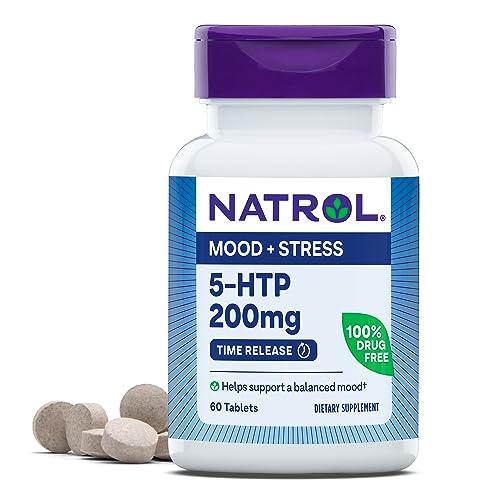
So the evidence here is limited, but it is not merely theoretical. The hypothesis was tested once, in a trial designed well enough to use an objective recorder instead of a symptom diary, and the answer was negative. Two caveats cut in the honest direction rather than the hopeful one. That trial enrolled postmenopausal women rather than women still in the perimenopausal transition, and at 24 participants it was too small to rule out a modest effect. It also tested 150 mg/day, which is lower than the 200 mg strength of both products featured further up this page, so a reader following those links would be taking more than the dose that failed to work, not less. None of that turns a negative result into a positive one. On the current evidence there is no clinical basis for buying 5-HTP specifically to reduce hot flashes or night sweats.
Safety Considerations and Side Effects of 5-HTP
Like any supplement, 5-HTP may have potential side effects. These can include gastrointestinal issues such as nausea, vomiting, diarrhea, and stomach pain. Some individuals may also experience drowsiness or muscle problems.
It is particularly important to consider potential interactions if you are taking other medications, especially antidepressants or other substances that affect serotonin levels. Combining 5-HTP with these medications could potentially lead to an excess of serotonin, a condition known as serotonin syndrome, which can be serious. Always discuss any supplements with a healthcare professional before starting them, especially if you have existing health conditions or are on medication.

References
- Changes in serotonin contents in brain affect metabolic heat production of rabbits in cold. The American journal of physiology, 1978
- [PHYSIOLOGICAL ACTION OF SEROTONIN]. Pathologie et biologie, 1964
- The potential of 5-hydryoxytryptophan for hot flash reduction: a hypothesis. Alternative medicine review : a journal of clinical therapeutic, 2005
- Treatment of menopausal hot flashes with 5-hydroxytryptophan. Maturitas, 2010
- [Detection and biochemical exploration of carcinoid tumors]. La Nouvelle presse medicale, 1974
- [The vasomotor action of carragenine in rats]. Comptes rendus des seances de la Societe de biologie et de ses filiales, 1977
These statements have not been evaluated by the Food and Drug Administration. This information is not intended to diagnose, treat, cure, or prevent any disease. Content is for informational purposes only and is not medical advice; consult a qualified healthcare provider before starting any supplement. As an Amazon Associate we earn from qualifying purchases.
