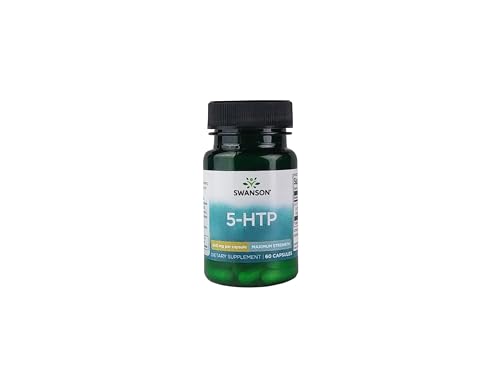
As women navigate midlife and menopause, many explore various options to support their well-being. 5-Hydroxytryptophan (5-HTP) is a compound often discussed in this context, given its role as a precursor to serotonin.
Concerns about the sustained use of any supplement are natural and important. This article aims to provide an evidence-based overview of what current research suggests regarding 5-HTP long-term safety, helping you make informed decisions.
What is 5-HTP and Why is Long-Term Safety Relevant?
5-HTP is a naturally occurring amino acid that the body converts into serotonin, a neurotransmitter involved in mood, sleep, and appetite. Because serotonin plays such a broad role in bodily functions, supporting its levels through supplementation like 5-HTP has garnered interest.
When considering any supplement for ongoing use, understanding its long-term safety profile is crucial. This involves looking at potential side effects, interactions, and any physiological changes that might occur over extended periods. While some research on 5-HTP has explored its effects, comprehensive long-term human safety studies specifically on its use in midlife and menopause are still developing.
It’s important to differentiate between short-term observations and sustained use. While some studies have looked at 5-HTP for specific durations, extrapolating these findings directly to very long-term, daily use requires careful consideration.
Reviewing Available Evidence on 5-HTP and Extended Use
Research into 5-HTP has explored its potential effects in various contexts. For example, some early studies investigated serotonin precursors in conditions like chronic primary headache, comparing L-5-hydroxytryptophan to a placebo [1]. However, the duration of these studies may not always reflect very long-term use.
Other research has examined 5-HTP in combination with other substances. One study explored the anorectic interaction and safety of 5-hydroxytryptophan/carbidopa combined with phentermine or diethylpropion in rats [2]. This specific context, involving other compounds and conducted in animal models, provides insights into particular interactions rather than general long-term human safety.
Another animal study explored 5-HTP as an augmentation strategy for SSRIs, demonstrating a pharmacodynamic proof of concept in mice [3]. While these animal studies offer valuable mechanistic insights, they do not directly translate to long-term safety in humans, especially for women in midlife and menopause. The evidence for 5-HTP long-term safety is currently considered moderate, meaning that while some data exists, more extensive human studies specifically on prolonged use are needed to draw definitive conclusions.
Potential Concerns and Considerations for Long-Term 5-HTP Use
One area of consideration for any supplement that influences neurotransmitter levels is the potential for imbalances. Serotonin is part of a complex system, and sustained alteration of one component could theoretically have downstream effects. However, current research directly linking long-term 5-HTP use to significant, adverse serotonin system imbalances in humans is not extensively documented.
It’s also important to be aware that some research, though not directly on 5-HTP in humans, highlights the intricate nature of biological systems. For instance, a study in Drosophila indicated a diabetes-like biochemical and behavioral phenotype induced by predator stress [4]. While this is not about 5-HTP, it illustrates how systemic stressors can impact physiology, reinforcing the need for caution when introducing external compounds over extended periods without robust long-term human data.
The implications of nutritional supplements in chronic illness, including those affecting mood, have been discussed, emphasizing the need for risk management [5]. This general principle applies to 5-HTP, suggesting that individuals with existing health conditions should exercise particular caution and discuss supplementation with a healthcare provider.
Interactions and Combination Therapies
The potential for interactions is a significant aspect of long-term safety. 5-HTP should not be combined with medications that also affect serotonin levels, such as SSRIs, without strict medical supervision, due to the theoretical risk of excessive serotonin activity. While some animal research has explored 5-HTP as an SSRI augmentation strategy in mice [3], this is a controlled research context and not a recommendation for self-medication.
Some combination pharmacotherapies have been reviewed for conditions like fibromyalgia [6]. While 5-HTP might be part of discussions around such combinations, these are typically under medical guidance and involve specific formulations and dosages. The safety profile of 5-HTP when combined with other substances, especially over extended periods, can be different from its use alone. For instance, an animal study looked at 5-HTP/carbidopa with other compounds and their safety in rats [2], indicating that combinations require specific safety evaluations.
What Does This Mean for Women in Midlife and Menopause?
For women in midlife and menopause considering 5-HTP for an extended period, the current research landscape suggests a moderate level of evidence regarding long-term safety. While some studies have explored 5-HTP’s effects, comprehensive, large-scale, long-term human trials specifically addressing its safety in this demographic are not yet widely available.
This means that while 5-HTP has been studied in various contexts, including some short-to-medium term applications, definitive conclusions about its effects over many years of continuous use are still being developed. Individuals considering long-term use should remain vigilant for any changes in their well-being and maintain open communication with their healthcare provider.
It is always prudent to start with the lowest effective dose if choosing to supplement and to periodically reassess the need for continued use. Monitoring for any unexpected effects is key, and discontinuing use if concerns arise is advisable.
Future Research Directions
As interest in compounds like 5-HTP continues, future research will likely focus on more extensive and longer-duration human studies. These studies would ideally involve diverse populations, including women in midlife and menopause, to better understand the long-term physiological impacts, potential benefits, and safety profiles.
Understanding how 5-HTP interacts with the aging body and hormonal changes characteristic of menopause will be crucial. Such research could provide more specific guidance on optimal dosages, durations of use, and identify any subgroups who might benefit more or face higher risks from sustained 5-HTP supplementation. Until then, a cautious and informed approach is recommended.

References
- Serotonin precursors in chronic primary headache. A double-blind cross-over study with L-5-hydroxytryptophan vs. placebo. Journal of neurosurgical sciences, 1985
- Anorectic interaction and safety of 5-hydroxytryptophan/carbidopa plus phentermine or diethylpropion in rat. Behavioural pharmacology, 2021
- SSRI Augmentation by 5-Hydroxytryptophan Slow Release: Mouse Pharmacodynamic Proof of Concept. Neuropsychopharmacology : official publication of the American College of Neuropsychopharmacology, 2016
- A diabetes-like biochemical and behavioural phenotype of Drosophila induced by predator stress. Proceedings. Biological sciences, 2023
- Risk management of nutritional supplements in chronic illness: the implications for the care of cancer and depression. The Proceedings of the Nutrition Society, 2007
- Combination pharmacotherapy for the treatment of fibromyalgia in adults. The Cochrane database of systematic reviews, 2018
These statements have not been evaluated by the Food and Drug Administration. This information is not intended to diagnose, treat, cure, or prevent any disease. Content is for informational purposes only and is not medical advice; consult a qualified healthcare provider before starting any supplement. As an Amazon Associate we earn from qualifying purchases.
