For women navigating midlife and menopause, sleep can become a significant concern. Many seek ways to support their sleep architecture, and 5-hydroxytryptophan (5-HTP) is an compound that often comes up in discussions about sleep support. As a precursor to serotonin, which can then be converted into melatonin, 5-HTP’s role in the sleep-wake cycle is a topic of interest.
Understanding the optimal timing for when to take 5-HTP can be an important aspect of its use for sleep support. While individual responses can vary, research offers some insights into how 5-HTP interacts with the body’s systems that regulate sleep. This article aims to provide an evidence-based overview of current understanding regarding 5-HTP timing for sleep.
5-HTP and the Serotonin Pathway: A Brief Overview
5-HTP is a naturally occurring amino acid that serves as an intermediate step in the biosynthesis of the neurotransmitter serotonin. Serotonin plays a multifaceted role in the body, influencing mood, appetite, and sleep. Within the brain, serotonin is a precursor to melatonin, a hormone crucial for regulating circadian rhythms and promoting sleep.
Because of this connection, supplementing with 5-HTP is thought by some to potentially support the body’s natural production of serotonin and subsequently, melatonin. The body’s intricate system of neurotransmitters and hormones works in concert, and influencing one part of this system, such as serotonin levels, can have downstream effects on others, including those involved in sleep regulation.
General Timing Considerations for Sleep Support
When considering when to take 5-HTP for sleep, the goal is often to align its potential effects with the body’s natural sleep-wake cycle. Many individuals who use supplements for sleep support typically take them in the evening, closer to bedtime. This timing is generally chosen to allow the compound to be absorbed and begin its potential actions before the desired sleep onset.
Research in animal models has explored the time-related effects of serotonergic activation by 5-HTP on sleep. One study noted that the effects of 5-HTP on sleep and body temperature in mice were dose and time-related [1]. This suggests that the timing of administration could be a factor in how 5-HTP influences sleep parameters. Another study in an invertebrate model also investigated the sleep-promoting effects of a GABA/5-HTP mixture, observing behavioral changes [2], and a similar study in vertebrate models also found sleep-promoting effects [3].
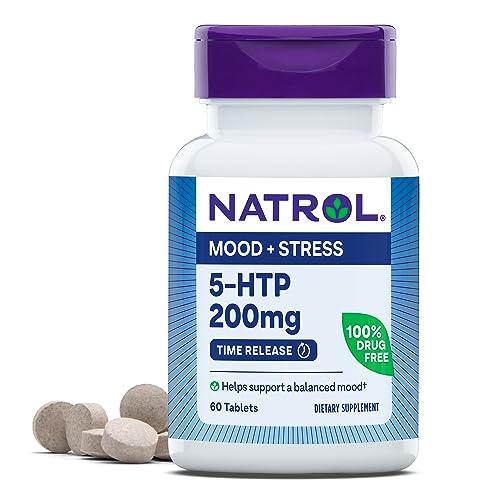

Specific Research on 5-HTP Timing and Sleep
While direct human studies specifically pinpointing an ‘optimal’ timing for 5-HTP for sleep are limited, existing research provides some clues. An older study investigating human sleep and 5-HTP noted effects with repeated high doses [4]. This indicates that 5-HTP can influence sleep in humans, though specific timing recommendations were not the primary focus.
Another area of research has looked at how timed injections of L-5-hydroxytryptophan can modulate circadian rhythms, such as those in serum and CSF cortisol in rhesus monkeys [5]. This suggests that 5-HTP can interact with the body’s internal clock mechanisms, which are fundamental to sleep-wake cycles. While this isn’t a direct recommendation for human timing, it underscores the potential for timing to be relevant.
It’s worth noting that some research has explored combinations of compounds. For example, a study on the sedative and hypnotic effects of nuciferine mentioned enhancing rodent sleep via serotonergic system modulation, highlighting the broader role of the serotonergic system in sleep [6]. The concept of supporting the serotonergic system is central to understanding 5-HTP’s potential role in sleep.
Considerations for Midlife and Menopause
During midlife and menopause, hormonal shifts can significantly impact sleep quality. Many women experience difficulties falling asleep, staying asleep, or experiencing restorative sleep. While 5-HTP is not a hormone, its potential to support the serotonin pathway, and subsequently melatonin production, is sometimes considered in the context of these sleep challenges.
Given the often-disrupted circadian rhythms experienced during this life stage, aligning 5-HTP administration with the natural evening wind-down period may be a reasonable approach for some individuals. However, individual responses to supplements can vary, and what works well for one person may not be ideal for another. It is always important to observe one’s own body and adjust accordingly, ideally under professional guidance.
Dosage and Combination with Other Compounds
The effectiveness of 5-HTP for sleep may not only depend on timing but also on dosage. Research in mice showed that the effects of 5-HTP on sleep were dose-related [1]. This suggests that finding an appropriate dosage is as important as finding an appropriate time.
Furthermore, some studies have explored 5-HTP in combination with other compounds. For instance, a GABA/5-HTP mixture demonstrated sleep-promoting effects in both invertebrate [2] and vertebrate models [3]. Another study looked at neurotransmitter-precursor-supplement intervention for detoxified heroin addicts, which included 5-HTP, indicating its use in broader neurological support contexts [7]. These combinations highlight that 5-HTP’s actions can be part of a more complex approach to supporting neurological function and sleep.
References
- Effects of serotonergic activation by 5-hydroxytryptophan on sleep and body temperature of C57BL/6J and interleukin-6-deficient mice are dose and time related. Sleep, 2008
- Sleep-promoting effects of a GABA/5-HTP mixture: Behavioral changes and neuromodulation in an invertebrate model. Life sciences, 2016
- Sleep-promoting effects of the GABA/5-HTP mixture in vertebrate models. Behavioural brain research, 2016
- Human sleep and 5-HTP. Effects of repeated high doses and of association with benserazide (RO.04.4602). Electroencephalography and clinical neurophysiology, 1976
- Circadian rhythms in serum and CSF cortisol of rhesus monkeys, and their modulation by timed injections of L-5-hydroxytryptophan. Brain research, 1981
- Sedative and hypnotic effects of nuciferine: enhancing rodent sleep via serotonergic system modulation. The international journal of neuropsychopharmacology, 2025
- Neurotransmitter-precursor-supplement intervention for detoxified heroin addicts. Journal of Huazhong University of Science and Technology. Medical sciences = Hua zhong ke ji da xue xue bao. Yi xue Ying De wen ban = Huazhong keji daxue xuebao. Yixue Yingdewen ban, 2012
These statements have not been evaluated by the Food and Drug Administration. This information is not intended to diagnose, treat, cure, or prevent any disease. Content is for informational purposes only and is not medical advice; consult a qualified healthcare provider before starting any supplement. As an Amazon Associate we earn from qualifying purchases.
