Ready to buy? Check current prices on Amazon and compare deals before you decide.
Are you experiencing shifts in your mood, struggles with sleep, or changes in your appetite that feel unfamiliar? Perhaps you’re navigating the complexities of perimenopause, a time when hormonal fluctuations can profoundly impact your well-being. If you’ve started researching natural approaches to support your mental and emotional health, you’ve likely encountered 5-HTP, a supplement often discussed for its potential role in serotonin production.
But what exactly is 5-HTP, and can it truly offer the relief you’re seeking? This comprehensive guide will explore the science behind 5-HTP, examine its potential benefits for mood, sleep, and appetite, and address crucial safety considerations, especially if you are taking other medications. Our goal is to provide you with clear, evidence-based information to help you make informed decisions about your health.
FTC Disclosure: This article may contain affiliate links. We may earn a commission from purchases made through these links, but this comes at no extra cost to you. We only recommend products and services we believe in.
What is 5-HTP? The Serotonin Connection Explained
5-HTP, or 5-hydroxytryptophan, is a naturally occurring amino acid that serves as a direct precursor to serotonin, a crucial neurotransmitter in the brain. Serotonin plays a vital role in regulating mood, sleep, appetite, pain perception, and cognitive functions. Unlike tryptophan, another serotonin precursor, 5-HTP can cross the blood-brain barrier more readily and is directly converted into serotonin.
The primary source of 5-HTP for supplements is the seeds of the African plant Griffonia simplicifolia. This botanical origin makes 5-HTP a popular choice for individuals seeking natural ways to support their brain chemistry. Understanding its direct role in serotonin synthesis is key to appreciating its potential applications.
The Serotonin Synthesis Pathway
To fully grasp 5-HTP’s function, it helps to visualize the serotonin synthesis pathway. Dietary tryptophan, an essential amino acid, is first converted into 5-HTP by the enzyme tryptophan hydroxylase. Subsequently, 5-HTP is converted into serotonin (5-hydroxytryptamine or 5-HT) by the enzyme L-amino acid decarboxylase.
Supplementing with 5-HTP essentially bypasses the rate-limiting step of tryptophan hydroxylase, providing the body with a direct building block for serotonin. This direct pathway is why 5-HTP is often considered more potent than tryptophan for increasing brain serotonin levels. Increased serotonin can then influence various physiological processes.

5-HTP for Mood Support: Evidence and Considerations
One of the most widely researched applications of 5-HTP is its potential to support mood, particularly in individuals experiencing symptoms of depression and anxiety. The “serotonin hypothesis” of depression suggests that imbalances in serotonin levels may contribute to mood disorders. By increasing serotonin, 5-HTP aims to help restore this balance.
Research on 5-HTP and Depression
Early research, primarily from the 1970s and 1980s, showed promising results for 5-HTP in treating depression, and it is worth being specific about how thin that base turned out to be. The Cochrane systematic review of tryptophan and 5-HTP for depression searched the literature and located 108 trials, of which only two, involving 64 patients between them, were of sufficient quality to meet its inclusion criteria[1]. The pooled result did favor the precursors over placebo (Peto odds ratio 4.10, 95 percent confidence interval 1.28 to 13.15), but the reviewers wrote that the evidence was of insufficient quality to be conclusive, and concluded that because alternative antidepressants exist which have been proven effective and safe, the clinical usefulness of 5-HTP and tryptophan is limited at present[1]. Quoting the favorable half of that result without the verdict attached is the most common way this review gets misread.
The largest modern trial is a null, and it was run at a dose close to the one sold on this page. A multicenter randomized crossover trial across 13 Belgian hospitals gave 166 patients 100 mg of 5-HTP twice daily for 8 weeks[2]. Serum 5-HTP and serotonin both rose significantly against placebo, and nothing the patients reported changed: 35.6 percent responded on 5-HTP against 37.6 percent on placebo (p=.830), with depression, anxiety and stress scores comparable between arms. Those patients were being treated for fatigue in quiescent inflammatory bowel disease rather than for depression, so it is not a depression trial. It is, however, the largest controlled test of whether 100 mg twice daily moves mood scores, and it did not. 5-HTP is not a first-line treatment for clinical depression and does not have the evidence base of prescription antidepressants.
5-HTP and Anxiety
Given the close link between serotonin and anxiety, 5-HTP has also been explored for its anxiolytic properties, and the human evidence comes almost entirely from experimental panic provocation rather than from treating anxiety. In one trial, 24 panic disorder patients and 24 healthy volunteers received 200 mg of L-5-HTP or placebo before a 35 percent carbon dioxide panic challenge[3]. 5-HTP significantly reduced subjective anxiety, panic symptom score and number of panic attacks in the patients, with no such effect in the healthy volunteers. A second trial gave 200 mg of 5-HTP or placebo to 32 healthy volunteers ahead of a cholecystokinin-tetrapeptide challenge and found a nonsignificant difference in panic rate, 19 percent after 5-HTP against 44 percent after placebo (p=0.13)[4].
What those studies test is whether a single dose blunts an artificially induced panic attack under laboratory conditions. That is a real finding about serotonin and panic, and it is a different question from whether taking 5-HTP daily reduces anxiety in ordinary life, which neither trial was designed to answer.
It is important to note that anxiety is a complex condition with various underlying causes. While 5-HTP may offer some support, it should not replace professional medical advice or prescribed treatments for severe anxiety disorders. Always consult a healthcare provider before starting any new supplement, especially for mental health concerns.
5-HTP for Sleep and Perimenopause Support
Many women in their 40s and 50s experience sleep disturbances and mood changes as they enter perimenopause. Hormonal fluctuations, particularly declining estrogen levels, can impact serotonin production and regulation, leading to insomnia, hot flashes, and increased anxiety or irritability. This makes 5-HTP an interesting candidate for support during this life stage.
Improving Sleep Quality
Serotonin is not only a mood regulator but also a precursor to melatonin, the hormone that controls our sleep-wake cycle. When serotonin levels are adequate, the body can produce sufficient melatonin to promote restful sleep. Therefore, by boosting serotonin, 5-HTP may indirectly improve sleep quality and duration.
The direct sleep evidence for 5-HTP on its own is thinner than the mechanism suggests, and the two halves of the usual claim rest on very different studies. For REM sleep there is a direct trial: 18 patients with Parkinson disease and REM sleep behavior disorder took 50 mg of 5-HTP daily in a crossover design, and it increased the total percentage of stage REM sleep, with only a marginal and nonsignificant reduction in arousal index and in wake after sleep onset[5]. For falling asleep faster, the trial usually cited tested a combination amino acid formula containing both GABA and 5-HTP rather than 5-HTP alone, in 18 patients split nine to a group; time to fall asleep fell from 32.3 to 19.1 minutes on the active formula against no change on placebo[6]. A combination product cannot show which of its ingredients did the work.
When the American Academy of Sleep Medicine’s Clinical Practice Review Committee reviewed nonprescription treatments for insomnia, 5-hydroxytryptophan was one of the products it examined by name, and the committee reported that rigorous scientific data supporting a beneficial effect were not found for the majority of the supplements reviewed, with studies limited by small numbers of participants and sparse use of objective measurements[7]. Targeted research on 5-HTP alone for perimenopausal insomnia would still be valuable.
Addressing Perimenopausal Symptoms
Beyond sleep, some women look to 5-HTP for the irritability, mood swings and anxiety that can accompany perimenopause. 5-HTP does not address hormonal changes directly, and the evidence that it helps with the symptoms most specific to this stage is weaker than the popular framing suggests.
Hot flashes are the clearest case, because a trial was actually run. Twenty-four postmenopausal women reporting frequent hot flashes received 150 mg per day of 5-HTP or placebo in double-blind fashion, with the outcome measured objectively by a miniature electronic hot flash recorder rather than by self-report[8]. No significant effect on hot flash frequency was found, and the authors concluded that at the dose given, 5-HTP does not significantly ameliorate the frequency of menopausal hot flashes. They described the study as preliminary given its small size. That dose sits inside the range this article recommends, so the honest summary is not that the question is untested. It is that the one test available came back negative.
It’s crucial for women in perimenopause to discuss all symptoms and potential treatments with their healthcare provider. 5-HTP may be a complementary strategy, but it’s not a substitute for addressing core hormonal changes or other medical interventions.
5-HTP and Appetite Regulation
Serotonin plays a significant role in satiety, the feeling of fullness after eating. Higher serotonin levels are often associated with reduced appetite and fewer cravings, particularly for carbohydrates. This mechanism has led to interest in 5-HTP for weight management and appetite control.
Studies have explored the effect of 5-HTP on appetite, and the doses those studies used are the part that usually gets left out. Nineteen obese women with a body mass index between 30 and 40 took 8 mg per kilogram of body weight per day for five weeks with no dietary restriction, and showed decreased food intake and weight loss alongside anorexia-related symptoms, with no change in mood state[9]. Eight mg per kilogram works out to about 600 mg per day for a 75 kg woman. A second trial gave 20 obese patients 900 mg per day across two consecutive six-week periods and found significant weight loss, reduced carbohydrate intake and consistent early satiety[10]. A third gave 25 overweight patients with non-insulin-dependent diabetes 750 mg per day for two weeks and found reduced daily energy intake, driven mainly by less carbohydrate and fat[11].
Those numbers are worth reading against this page. The dosage answer in the FAQ below tops out at 300 mg per day, and both product cards on this page are 200 mg capsules. The appetite findings were therefore generated at roughly three to four and a half times the 200 mg in those capsules, which makes them a fact about high-dose 5-HTP rather than a property of the product on the shelf. The one recent positive satiety result in overweight women used a sublingual spray of plant extracts dosed five times a day rather than capsules, which is again a different exposure from the one on offer here[12].
While these findings are encouraging, 5-HTP should not be viewed as a magic bullet for weight loss. It’s a tool that may support appetite regulation within a broader strategy of healthy eating and regular physical activity. Consult a healthcare professional or registered dietitian for personalized advice on weight management.
Safety, Side Effects, and Crucial Interactions with Medications
While 5-HTP is generally well-tolerated at recommended doses, understanding its potential side effects and, critically, its interactions with other medications is paramount. This section is non-negotiable for anyone considering 5-HTP, especially if you are currently taking antidepressants or other serotonergic drugs.
Common Side Effects
Typical side effects, usually mild and transient, can include nausea, stomach upset, diarrhea, vomiting, and drowsiness. These often occur at higher doses or when first starting supplementation. Starting with a low dose and gradually increasing it can help minimize these gastrointestinal issues.
The Critical Risk: Serotonin Syndrome
The most serious and potentially life-threatening risk associated with 5-HTP is serotonin syndrome. This condition occurs when there is an excessive accumulation of serotonin in the brain. It can happen if 5-HTP is taken concurrently with other medications that increase serotonin levels.
NEVER combine 5-HTP with any antidepressant medication, including Selective Serotonin Reuptake Inhibitors (SSRIs) like fluoxetine (Prozac), sertraline (Zoloft), paroxetine (Paxil), or escitalopram (Lexapro).
Also, avoid combining 5-HTP with Serotonin-Norepinephrine Reuptake Inhibitors (SNRIs) like venlafaxine (Effexor) or duloxetine (Cymbalta), tricyclic antidepressants (TCAs), or monoamine oxidase inhibitors (MAOIs).
Other medications that can increase serotonin and should not be combined with 5-HTP include triptans for migraines (e.g., sumatriptan), certain pain medications (e.g., tramadol), and even some herbal supplements like St. John’s wort. Symptoms of serotonin syndrome can range from mild (agitation, confusion, rapid heart rate, muscle rigidity) to severe (high fever, seizures, irregular heartbeat, unconsciousness). If you suspect serotonin syndrome, seek immediate medical attention.
Always consult your doctor before taking 5-HTP, especially if you are on any prescription medications or have pre-existing health conditions. Your doctor can assess potential interactions and determine if 5-HTP is safe for you.
Other Potential Interactions
5-HTP may also interact with sedatives, as it can cause drowsiness. Combining it with sedatives or alcohol could intensify their effects. Individuals with liver disease or kidney disease should exercise caution and consult their physician.
The Griffonia simplicifolia Connection
The 5-HTP found in dietary supplements is typically extracted from the seeds of the African plant Griffonia simplicifolia. This plant has a long history of traditional use in West and Central Africa for various ailments, including wound healing, digestive issues, and as an aphrodisiac.
Modern scientific interest focuses almost exclusively on its high concentration of 5-HTP. When you see “Griffonia simplicifolia extract” on a supplement label, it indicates the natural source of the 5-HTP. The standardization of these extracts ensures a consistent amount of 5-HTP per dose.
Choosing a 5-HTP Supplement
When selecting a 5-HTP supplement, quality and purity are paramount. Since supplements are not as strictly regulated as pharmaceuticals, it’s essential to be a discerning consumer. Look for products that prioritize transparency and third-party testing.
There is a specific reason that advice carries more weight for 5-HTP than it would for a generic supplement. An analysis of commercially available 5-HTP reported that all eight samples it tested contained three or more contaminants of the peak X family, the marker implicated in eosinophilia-myalgia syndrome cases[13]. A review five years later argued the other way, reporting that no definitive cases of 5-HTP toxicity had emerged in two decades of worldwide use and that peak X lacks credibility as a hazard because it appears at infinitesimal concentrations and may be a chromatographic artifact[14]. The Cochrane reviewers, for their part, noted that the possible association between these substances and the potentially fatal eosinophilia-myalgia syndrome has not been elucidated[1]. The question is open in both directions, which is exactly why buying from a manufacturer that publishes third-party test results is worth the trouble.
| Feature | Description |
|---|---|
| Source | Ensure the 5-HTP is derived from Griffonia simplicifolia seeds. |
| Purity | Look for products that are free from unnecessary fillers, artificial colors, and common allergens. |
| Third-Party Testing | Choose brands that voluntarily submit their products for independent third-party testing for purity and potency. This verifies that the product contains what it claims and is free from contaminants. |
| Dosage | Start with a low dose (e.g., 50 mg) and gradually increase as needed, under the guidance of a healthcare professional. |
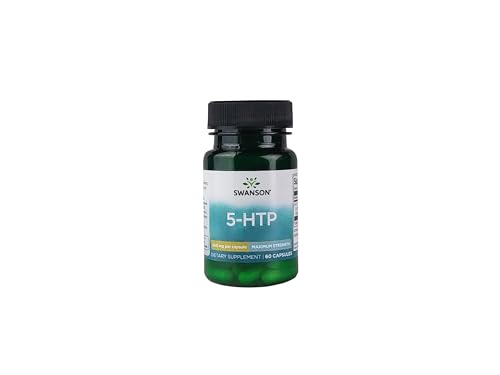
You can find various forms of 5-HTP supplements, including standard capsules, extended-release formulas, and sometimes combined with other synergistic ingredients like magnesium or B vitamins that also support mood and nerve function. When searching for products online, consider looking for “pure 5-HTP supplements,” “Griffonia simplicifolia extract,” or “time-release 5-HTP” to find options that align with your needs.
Frequently Asked Questions (FAQ)
How long does it take for 5-HTP to work?
The time it takes for 5-HTP to show effects can vary. Some individuals report noticing changes in mood or sleep within a few days to a week, while for others, it may take several weeks of consistent use. Individual responses depend on factors like dosage, metabolism, and the specific condition being addressed.
What is the recommended dosage for 5-HTP?
Typical dosages for 5-HTP range from 50 mg to 300 mg per day, often divided into multiple doses. It’s crucial to start with the lowest effective dose (e.g., 50 mg) and gradually increase it only if necessary, and always under the guidance of a healthcare professional. Higher doses increase the risk of side effects.
Can 5-HTP be taken with food?
5-HTP can be taken with or without food. However, taking it with food may help reduce gastrointestinal side effects like nausea or stomach upset, especially when you are first starting. Some prefer to take it before bed for sleep support.
Is 5-HTP addictive?
There is no evidence to suggest that 5-HTP is physically addictive. However, discontinuing any supplement that impacts brain chemistry should be done gradually and under medical supervision, as sudden cessation can sometimes lead to a return of symptoms.
Can men take 5-HTP?
Yes, 5-HTP is not gender-specific and can be taken by men for similar reasons, such as mood support, sleep improvement, and appetite regulation. The same safety precautions and dosage guidelines apply to men as they do to women.
Is 5-HTP safe for long-term use?
The long-term safety of 5-HTP has not been extensively studied in large, rigorous clinical trials. While short-term use appears generally safe for many individuals, it’s always best to consult a healthcare professional for guidance on prolonged supplementation and to monitor for any potential adverse effects.
References
- Tryptophan and 5-hydroxytryptophan for depression. Cochrane Database Syst Rev (2002). PMID 11869656
- Effect of 5-Hydroxytryptophan on Fatigue in Quiescent Inflammatory Bowel Disease: A Randomized Controlled Trial. Gastroenterology (2022). PMID 35940251
- Acute L-5-hydroxytryptophan administration inhibits carbon dioxide-induced panic in panic disorder patients. Psychiatry Res (2002). PMID 12559480
- The effect of 5-hydroxytryptophan on cholecystokinin-4-induced panic attacks in healthy volunteers. J Psychopharmacol (2004). PMID 15260907
- Preliminary finding of a randomized, double-blind, placebo-controlled, crossover study to evaluate the safety and efficacy of 5-hydroxytryptophan on REM sleep behavior disorder in Parkinson’s disease. Sleep Breath (2022). PMID 34403081
- A randomized, placebo-controlled trial of an amino acid preparation on timing and quality of sleep. Am J Ther (2010). PMID 19417589
- Oral nonprescription treatment for insomnia: an evaluation of products with limited evidence. J Clin Sleep Med (2005). PMID 17561634
- Treatment of menopausal hot flashes with 5-hydroxytryptophan. Maturitas (2010). PMID 20031347
- The effects of oral 5-hydroxytryptophan administration on feeding behavior in obese adult female subjects. J Neural Transm (1989). PMID 2468734
- Eating behavior and adherence to dietary prescriptions in obese adult subjects treated with 5-hydroxytryptophan. Am J Clin Nutr (1992). PMID 1384305
- Effects of oral 5-hydroxy-tryptophan on energy intake and macronutrient selection in non-insulin dependent diabetic patients. Int J Obes Relat Metab Disord (1998). PMID 9705024
- Satiety and amino-acid profile in overweight women after a new treatment using a natural plant extract sublingual spray formulation. Int J Obes (Lond) (2009). PMID 19752879
- Eosinophilia-myalgia syndrome case-associated contaminants in commercially available 5-hydroxytryptophan. Adv Exp Med Biol (1999). PMID 10721089
- Safety of 5-hydroxy-L-tryptophan. Toxicol Lett (2004). PMID 15068828
***
These statements have not been evaluated by the FDA. This product is not intended to diagnose, treat, cure, or prevent any disease.
These statements have not been evaluated by the Food and Drug Administration. This information is not intended to diagnose, treat, cure, or prevent any disease. Content is for informational purposes only and is not medical advice; consult a qualified healthcare provider before starting any supplement. As an Amazon Associate we earn from qualifying purchases.
